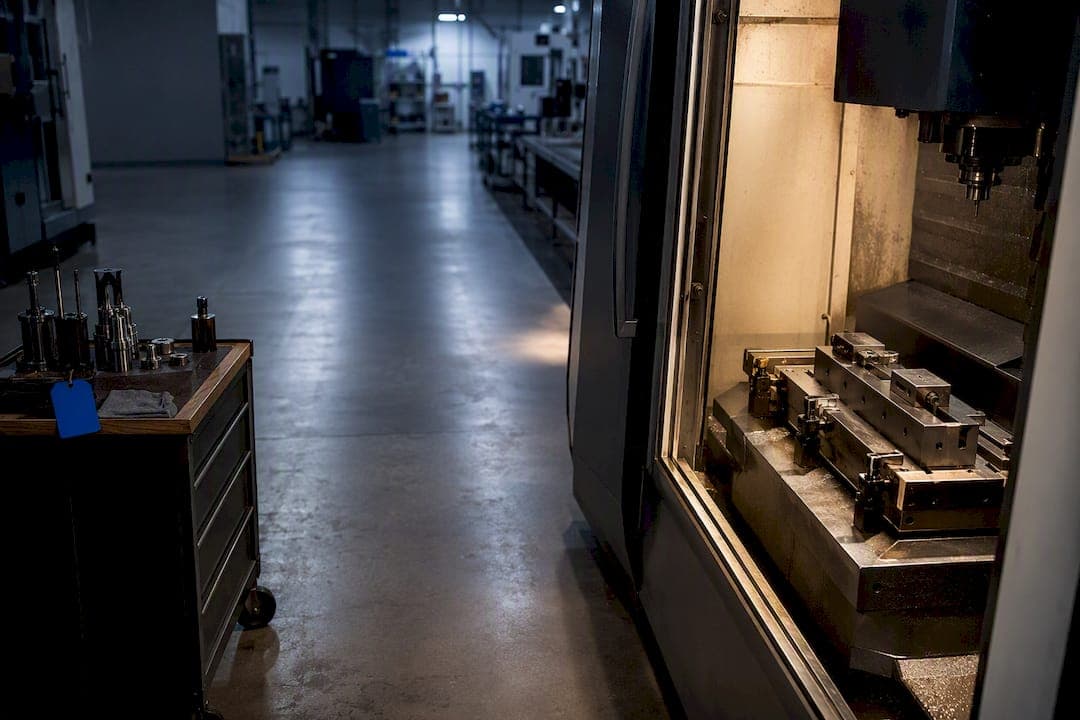
The fastest way to reduce machine downtime is to measure it automatically instead of on paper, then throw your first fixes at whatever machine is your bottleneck, not the loudest complaint on the floor. Making stops visible with automatic escalation, matching your maintenance approach to how critical each machine is, and piloting edge detection on two or three high-cost assets typically cuts unplanned downtime by 20 to 40 percent on the failure modes you target. The prioritized playbook follows below.
TL;DR:
- Focusing on the constraint machine and using an automated downtime capture system with 25 or fewer reason codes increases accuracy and helps target reductions more effectively.
- Prioritizing high-cost, high-criticality machines for edge detection pilots can prove ROI within 2 to 6 months, while spreading sensors plant-wide before stabilization risks waste.
- Tracking key KPIs such as downtime minutes, MTTR, MTBF, and OEE availability provides a solid foundation for measuring improvement and guiding targeted interventions.
- Fixes should be verified over multiple attempts before standardization, and ongoing feedback loops from operators ensure continuous process refinement.
- Using a dedicated cross-functional team with clear ownership and accountability for downtime causes, root cause analysis, and part inventory reduces delays and sustains long-term gains.
Table of Contents
- How Do You Actually Reduce Machine Downtime?
- What KPIs Should You Track to Reduce Downtime?
- Preventive, Condition-Based, or Predictive: Which Fits Your Machine?
- How Does Real-Time Detection Cut Unplanned Stops?
- Which Downtime Causes Should You Fix First?
- What Operator Habits Shorten Repair Time?
- When Should a Fix Become Standard Work?
- Who Should Own Downtime Reduction on Your Team?
- How Do You Find the Real Root Cause of a Breakdown?
- How Much First-Line Maintenance Should Operators Handle?
- How Do You Turn Downtime Data Into Ongoing Improvement?
- How Do You Prevent Spare Parts From Causing Delays?
- Where Should Limited Budgets Buy the Most Uptime?
- Run This Playbook Inside One Platform
- Sources
- FAQ
How Do You Actually Reduce Machine Downtime?
Downtime reduction fails in most shops for one reason: nobody agrees on what's actually causing it. You fix the squeaky wheel instead of the expensive one. Here's the order of operations that gets results in a shift, a week, and a quarter.
- Automate downtime capture with 25 or fewer reason codes. Pull stop signals straight from the PLC rather than relying on operators to write on a clipboard. Manual logging under-reports downtime by 30 to 60 percent because operators skip short stops or forget the reason by the time they log it. Baseline for two weeks before you change anything.
- Protect the constraint machine first. Every shop has one asset that limits total output. Find it, then move your monitoring, spare parts, and staff coverage there before spreading effort thin across the whole floor.
- Build a visual escalation ladder. An operator gets a prompt at the machine, an unresolved stop opens a supervisor ticket within a set window, and anything beyond that auto-dispatches to your CMMS. No stop should sit unowned for more than a few minutes.
- Separate the quick fix from the permanent fix. Get the machine running again, log what you did, then schedule the real corrective action separately. Change one variable at a time so you actually know what worked.
- Run targeted maintenance blitzes on wear parts. A focused 3S cleanup and spare-parts audit on your worst offender beats a scattered plant-wide push every time.
- Apply SMED principles to changeovers. Split internal setup steps (machine must be stopped) from external ones (can happen while it's running), and require a first-piece sign-off before the operator walks away. Shops that formalize setup reduction routinely cut changeover time by a third or more within a couple of months.
- Pilot a small predictive or edge-detection program on your highest-cost machines. Don't roll it out plant-wide. Pick two or three assets, set clear ROI gates, and prove the concept before spending more.
- Tighten preventive maintenance compliance through your CMMS. Usage-based triggers and automated reminders close the gap between "scheduled" and "actually done."
Pro Tip: Don't let your reason-code list grow past 25 options. Operators facing a long dropdown menu default to "other" or "misc," and you lose the exact data you built the system to capture.
Matching intervention to root cause pays off disproportionately. Shops that track tool life, validate programs before the first cut, and apply SMED to setups see outsized gains because tooling and programming errors concentrate in a few repeatable categories rather than spreading evenly across every possible failure.
What KPIs Should You Track to Reduce Downtime?
You can't fix what you don't measure the same way every time. Define "stopped" at the PLC level, not by human judgment, and set a microstop threshold between 60 and 120 seconds so brief hiccups get counted instead of disappearing into the noise.
Track these four numbers on every machine that matters:
- Downtime minutes by machine and downtime frequency by cause, using a two-level reason-code taxonomy (a broad category plus a specific reason).
- Mean Time to Repair (MTTR): total repair time divided by number of failures. If a machine failed four times last month for a combined 200 minutes of repair, your MTTR is 50 minutes.
- Mean Time Between Failures (MTBF): total operating time divided by number of failures, telling you how reliable the asset is between breakdowns.
- OEE Availability: actual run time divided by planned production time, one of the three components of Overall Equipment Effectiveness.
A visible floor scoreboard showing availability and top downtime causes changes behavior faster than any memo. Shops that put downtime inside a simple OEE display see faster buy-in because operators can watch the number move in real time. For the full formula and a worked example, see how to calculate OEE for a machine shop.
Baseline for two weeks before you touch anything, then compare pre and post numbers on the same machine under the same conditions. Comparing week 1 to week 12 without a stable baseline just tells you the weather changed.
Preventive, Condition-Based, or Predictive: Which Fits Your Machine?
Pick the maintenance approach by asking three questions: what does an hour of downtime on this machine actually cost you, how critical is it to your overall flow, and what signals can you realistically capture from it today?
- Preventive maintenance (scheduled, calendar or usage-based) is the right default for low-criticality machines and anything without good sensor access. Get this stable everywhere before you invest in anything fancier.
- Condition-based maintenance (triggered by a measured signal, like vibration or temperature crossing a threshold) fits mid-criticality machines where a cheap sensor can catch a problem early.
- Predictive maintenance (using trend data to forecast failure) belongs on your bottleneck or highest-cost machines only. It's most effective when focused on high-criticality assets and should follow preventive stabilization, not replace it.
The sequence matters: stabilize preventive maintenance plant-wide first, instrument your bottleneck machines second, then run predictive pilots third. A starter kit for that pilot needs controller tags you already have (spindle load, feed override, alarm codes), one or two external sensors if the controller doesn't expose enough, a dashboard, and an alert workflow with a clear measurement plan. For a realistic path to getting predictive maintenance operator-ready, see this 3 to 6 month rollout guide.
Pro Tip: Resist the urge to instrument every machine at once. Predictive monitoring on a machine that rarely fails or costs little when it does is wasted budget that would have bought more uptime on your actual constraint.
How Does Real-Time Detection Cut Unplanned Stops?
Edge detection works by watching a small set of signals against simple rules, not by predicting failure with complex models. A rule as basic as "spindle_speed equals zero while program_running exceeds 3 seconds" or "spindle_load drops more than 80 percent for over 3 seconds" catches the majority of unplanned stops on a typical CNC line. Spindle load monitoring at 1 to 2.5 kHz sampling gives you enough resolution to distinguish a real stop from normal load variation.
Run the pilot in phases:
- Select 3 to 5 machines, ideally including your constraint.
- Log a 2-week baseline with no alerts active, just data collection.
- Turn on detection and alerts for 4 to 8 weeks.
- Track three numbers: unplanned downtime minutes, MTTR, and false-positive rate.
| Pilot phase | Duration | What you track |
|---|---|---|
| Baseline | 2 weeks | Unplanned minutes, existing MTTR |
| Detection live | 4 to 8 weeks | Unplanned minutes, MTTR, false positives, OEE |
| Decision gate | End of pilot | Compare against baseline, check payback |
Route alerts so they actually shorten repair time: an operator prompt first, then a pre-filled CMMS ticket with the telemetry attached if unresolved, with suppression windows so one flapping sensor doesn't spam the whole shift. Integration into the operator's actual workflow matters as much as the detection rule itself. Expect 30 to 60 percent false positives before tuning, dropping below 10 percent once thresholds are calibrated to your specific machines. Keep clocks synced with NTP and buffer edge data locally so a network hiccup doesn't create a data gap right when you need it most. Case reports on this kind of setup show typical payback in 2 to 6 months for medium-run machines.
Which Downtime Causes Should You Fix First?
Pull every downtime event from the last month, sum the minutes by cause, and sort high to low. In most shops, a small handful of causes account for the majority of lost time, which is exactly what a Pareto analysis is built to expose.
- Run the Pareto twice: once by cause, once by machine, since your worst cause and your worst machine aren't always the same problem.
- Pick your top two or three items only. Chasing a long tail of minor causes burns effort you should be spending on the big ones.
- Set a pilot-to-rollout gate before you start: define in advance what MTTR reduction or unplanned-minute drop justifies expanding the fix plant-wide.
What Operator Habits Shorten Repair Time?
Short, specific prompts beat vague alarms. A good operator prompt names the likely cause and the next step, with an acknowledge button so the system knows someone saw it.
- Run a two-minute standup each hour: what was the biggest downtime event since the last check, and what's one action to prevent it recurring?
- Set escalation timing in advance, such as five minutes unresolved to supervisor, fifteen to a dispatched technician.
- Pre-fill CMMS tickets with the telemetry already attached so the technician isn't starting from zero.
- Post optimum machine settings at the station and require a first-piece check before full production resumes.
Pro Tip: An acknowledge button on the operator prompt sounds trivial, but it's the difference between knowing a stop was seen in 30 seconds versus discovering it 20 minutes later during a walk-through.
When Should a Fix Become Standard Work?
Before writing any fix into your standard operating procedure, ask two questions: has it worked more than once, and did someone actually verify the result against your baseline numbers? A fix that worked one time might be coincidence.
- Run 3S or 5S audits on a fixed cadence, weekly for high-traffic areas, monthly elsewhere.
- Schedule maintenance blitzes on your worst-performing machines quarterly, not just when something breaks.
- Move toward full TPM once your quick wins plateau. That's usually a multi-quarter commitment, not a weekend project.
- Keep the floor scoreboard current and audit it on the same schedule as your 5S checks so gains don't quietly erode.
Who Should Own Downtime Reduction on Your Team?
Downtime reduction stalls when it's treated as one person's side project. It needs a small cross-functional team with defined roles: an operations or plant manager who owns the priority list and resource decisions, a maintenance lead who owns repair response and PM compliance, an operator representative who flags what's actually happening at the machine, and someone who owns the data, whether that's a controls engineer or a supervisor comfortable with the CMMS and reporting dashboards.
Give each role a specific accountability, not a vague mandate. The maintenance lead should own MTTR on the constraint machine specifically, not "maintenance" generally. The operator representative should have a standing seat at the weekly review, not just an open invitation. Without that specificity, the team becomes a meeting instead of a mechanism.
Meet weekly at first, reviewing the Pareto chart and the top three open issues, then move to biweekly once the backlog stabilizes. Rotate the operator seat across shifts so you're not only hearing from day shift. The team's job is narrow: agree on the top three causes, assign an owner and a deadline to each, and check the prior list before adding anything new. A team that never closes an old item before opening five new ones isn't prioritizing, it's just tracking a longer list.
How Do You Find the Real Root Cause of a Breakdown?
Fixing the symptom instead of the cause is why the same machine keeps breaking. Two techniques handle most of what a shop floor needs: the 5 Whys and the fishbone (Ishikawa) diagram.
The 5 Whys works well for a single, specific failure. A spindle overheated. Why? Coolant flow was low. Why? The filter was clogged. Why? It hadn't been changed on schedule. Why? The PM trigger was calendar-based instead of usage-based on a machine running unusually heavy loads. That's usually where you land on the real fix, adjusting the trigger, not just replacing the filter again.
The fishbone diagram works better when a failure has multiple plausible contributors, sorting causes into categories like machine, method, material, manpower, and environment. It's especially useful in the cross-functional team meeting described above, since it gives operators, maintenance, and engineering a shared structure instead of arguing past each other.

Whichever technique you use, write the conclusion down and check it against your reason-code data. If the 5 Whys says "operator error" but your data shows the same failure recurring across three different operators, the real cause is probably the procedure, not the person. Root cause analysis only earns its keep when the fix actually reduces the recurrence rate. If the same failure shows up again next month, the "root cause" you identified wasn't it.
How Much First-Line Maintenance Should Operators Handle?
Operators who can clear a jam, reset a fault code, or swap a worn insert without waiting for a technician cut MTTR dramatically on the small stuff that adds up over a shift. This isn't about turning operators into mechanics. It's about closing the gap between "something's wrong" and "someone qualified is looking at it."
Start with a short list of tasks operators are trained and authorized to handle: basic cleaning, lubrication checks, tool changes within their station, and clearing common alarm codes with a documented procedure. Post the procedure at the machine, not in a binder in the office. A laminated card with three steps beats a ten-page manual nobody opens mid-shift.
Training works best in short, repeated sessions tied to real failures rather than one long onboarding session covering everything at once. When a stop happens and gets resolved, that's the moment to walk the operator through why it happened and what they can do next time, while it's fresh. Pair this with the acknowledge-and-escalate workflow described earlier so operators know exactly when a fix is within their authority and when it needs to go up the chain. Empowered doesn't mean unsupervised. It means the operator has a clear, bounded set of things they're trusted to fix, and everything else escalates fast instead of waiting.
How Do You Turn Downtime Data Into Ongoing Improvement?
A downtime reduction effort that stops after the initial project loses its gains within a year. The fix is a standing feedback loop that keeps frontline data flowing into decisions, not a one-time report that sits in a folder.
Close the loop with three habits: review the Pareto chart on a fixed schedule, ask operators what the data doesn't capture, and feed both into the next priority decision. Data tells you a machine stopped 40 times last month. It doesn't always tell you the alarm code was misleading or that a specific fixture was awkward to reload. Operators know that. Build a short, standing channel, a shift note field, a five-minute end-of-shift check-in, where that context gets captured alongside the numbers.
Feed the loop back into your reason-code taxonomy itself. If operators keep selecting "other" for a specific recurring issue, that's a sign your code list needs a new category, not that operators are being lazy. Revisit the taxonomy quarterly based on what's actually showing up in the "other" bucket.
The loop only works if someone owns closing it. Assign the same cross-functional team responsible for prioritization to also own the feedback cadence: what changed this month, what the data showed, and what frontline input adjusted the plan. Skipping this step is the most common reason a promising downtime initiative fades out by month six.
How Do You Prevent Spare Parts From Causing Delays?
A perfectly diagnosed failure still costs you hours if the part is three days out. Spare parts management is where a fast MTTR turns into a slow one, and it's often the least glamorous fix on this list.
Start by classifying parts by criticality, not just by cost. A $40 sensor that stops your bottleneck machine matters more than a $400 part for a rarely used auxiliary tool. Stock the cheap, high-failure-rate items generously, wear parts, common seals, standard inserts, and set a minimum-stock alert so nobody discovers a shortage mid-repair.
For expensive, slow-moving parts, a shared safety stock or a confirmed supplier lead time you've actually verified beats guessing. Keep a running list of average lead time per critical part so your reorder point reflects reality, not the number on the original purchase order from three years ago.
Tie spare-parts data to your downtime reason codes. If "waiting for parts" shows up as a recurring category in your Pareto, that's not a maintenance problem, it's an inventory problem, and it needs its own fix separate from the mechanical root cause. A tool crib or parts inventory system with low-stock alerts and check-in and check-out tracking removes the guesswork of "do we have this in stock" from the middle of an active repair, which is exactly when you don't want to be searching a shelf.
Where Should Limited Budgets Buy the Most Uptime?
Trying to prevent every possible failure is how downtime budgets get wasted. The better move is ranking machines by cost-of-downtime and spending your first dollars on the constraint, not the machine that fails most often. A cheap, rarely used asset failing ten times a year matters less than your bottleneck failing twice.
Start tactical: preventive maintenance everywhere, a Pareto to find your top two or three causes, and a small pilot on the constraint machine before buying anything predictive. Scale only what the pilot actually proves out.
The real blocker usually isn't technology, it's getting operators and supervisors to trust a new alert system enough to act on it fast. That trust gets built by involving them in the pilot from week one, not by handing them a dashboard after the fact.
— Availzye
Run This Playbook Inside One Platform
Availzye Machinist Pro replaces the spreadsheet and paper log combination that makes half of this playbook harder than it needs to be, giving you the maintenance tracking, job tracking, and parts visibility this article just walked through in one cloud-synced application instead of three disconnected tools.
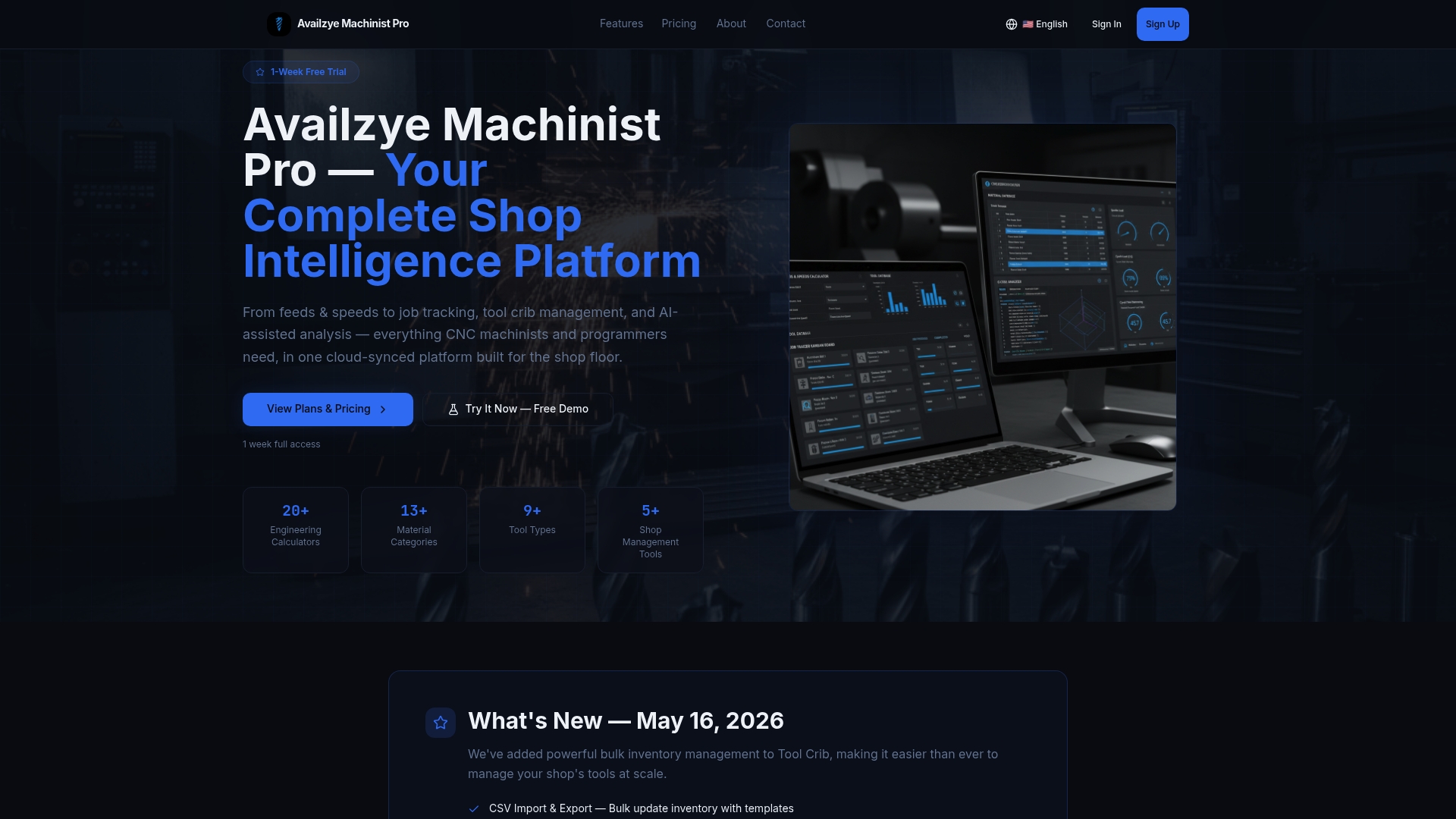
The Maintenance Tracker logs service history and flags PM compliance gaps automatically, the kind of usage-based triggers this article recommends over calendar-only schedules. The Job Tracker times your changeovers so SMED improvements show up in real numbers instead of a supervisor's impression. Tool Crib inventory with low-stock alerts handles the spare-parts problem directly, so "waiting for parts" stops being a recurring line on your Pareto chart. The AI Assistant gives operators a quick reference for setup questions and corrective steps without pulling a technician off another job.
Availzye Machinist Pro is offered in three tiers: Individual at $9.99 CAD per month, Small Shop at $24.99 CAD per month, and Team at $49.99 CAD per month, each with a 7-day free trial. If your shop is still tracking maintenance on paper or in three separate spreadsheets, start the trial and see how much of this playbook you can put into practice this week. For shops also looking at automating document and reporting workflows around production data, automated data extraction is worth a look as a complementary piece.
Sources
- How to Set Up Automated Event Detection to Cut Unplanned CNC Downtime Without Adding Headcount
- Predictive maintenance for CNC machines: reducing unplanned downtime
- Machine Downtime: Causes, Cost & How to Reduce It
- How to Reduce CNC Machine Downtime: Complete Guide
FAQ
How Can I Minimize System Downtime?
Automate downtime capture so you're measuring accurately, focus your first fixes on the bottleneck machine, and make stops visible with automatic escalation so nothing sits unowned. Pilot predictive or edge detection only after preventive maintenance is stable plant-wide.
What Is the KPI for Machine Downtime?
The core KPIs are Mean Time to Repair (MTTR), Mean Time Between Failures (MTBF), and OEE Availability, tracked alongside downtime minutes and frequency by cause. Together they tell you both how often machines fail and how fast you recover.
What Does Reduce Downtime Mean?
Reducing downtime means shortening both the time machines spend stopped and the frequency of those stops, measured through metrics like MTTR and OEE Availability rather than a general sense that things feel better. It requires accurate measurement first, since you can't reduce what you're not tracking correctly.
How Do You Reduce Machine Breakdown?
Match your maintenance approach to the machine: preventive maintenance as the baseline, condition-based monitoring where a sensor can catch an early warning sign, and predictive maintenance reserved for high-criticality or bottleneck assets. Combine that with root cause analysis, like the 5 Whys or a fishbone diagram, so repeat failures actually stop repeating.
Can Software Like Availzye Machinist Pro Help Reduce Machine Downtime?
Yes. Availzye Machinist Pro's Maintenance Tracker supports PM compliance and service logging, and its Tool Crib inventory helps avoid the parts-delay problem that extends MTTR, both direct contributors to the playbook covered in this article.